PSA vs BGS vs CGC: Which Card Grading Company Should You Choose?
Side-by-side comparison of PSA, BGS, and CGC in 2026. Compare grading fees, turnaround times, grading scales (10-point vs sub-grades), and resale value for your cards.
Loading...
Side-by-side comparison of PSA, BGS, and CGC in 2026. Compare grading fees, turnaround times, grading scales (10-point vs sub-grades), and resale value for your cards.
Deciding between PSA vs BGS vs CGC is one of the most important choices a card collector or investor can make. Each grading company has different standards, pricing, turnaround times, and market reputations. The right choice depends on what you collect, your budget, and your goals.
This guide breaks down every meaningful difference between the three major card grading companies so you can make an informed decision before submitting your cards. Fee and turnaround figures below were verified September 24, 2026 against PSA services, Beckett's temporary Jotform intake, and CGC's published schedule. Always re-check the live first-party page before you ship.
| Feature | PSA | BGS | CGC |
|---|---|---|---|
| Founded | 1991 | 1999 | 2020 (cards) |
| Grading Scale | 1-10 (whole numbers) | 1-10 (half-point increments) | 1-10 (half-point increments) |
| Sub-Grades | No | Yes by selected service | No on new submissions |
| Top Grade | Gem Mint 10 | Pristine 10 / Black Label | Pristine 10 |
| Current Entry Price | $59.99 Standard | $17.95 Base (Jotform) | $17 Bulk / $20 Economy |
| Current Entry Turnaround | 90-100 business days | 75+ business days | 150 / 90 working days |
| Express (mid-fast) | $199 / 20-30 business days | $79.95 / 15 business days | $100 / 5 working days |
| Market Premium | Highest resale values | Strong for specific categories | Growing acceptance |
| Best For | Sports cards, general collecting | Pokemon, condition-sensitive buyers | Budget-conscious bulk / TCG collectors |
According to our State of Card Grading 2026 study, the same visible condition can produce different predicted grades because each company applies a different rubric. Pricing also differs sharply: PSA's lowest active direct tier is $59.99 Standard (Value remains paused), while Beckett and CGC still publish lower entry fees with much longer queues. Pre-screening across all three scales helps you compare the likely grade before choosing the holder.
For capacity context, PSA's Backlog Tracker September 22, 2026 print is about 9 million active units (the September 8 print was 9.9 million; treat 9.9 million as prior-print context only). See the 2026 grading backlog guide and PSA Value-tier pause status.
PSA uses a straightforward 1 to 10 scale with whole numbers only. There are no sub-grades on the label. A PSA 10 is a PSA 10 regardless of whether centering was perfect or just barely within tolerance. This simplicity is both a strength and a weakness.
Strengths: Easy for buyers to understand. A PSA 10 is the gold standard, and there is no ambiguity about what it represents in the marketplace.
Weaknesses: No granularity. Two PSA 9 cards might have very different conditions. One could have been borderline PSA 10 with slightly off centering, while another might have multiple minor flaws across all categories.
BGS provides a final grade in half-point increments (9, 9.5, 10) along with four visible sub-grades: Centering, Corners, Edges, and Surface. Each sub-grade is also on a half-point scale.
The BGS Black Label is the pinnacle. When all four sub-grades are 10, the card receives a special black label instead of the standard gold. BGS Black Labels are exceptionally rare and command massive premiums.
Strengths: Maximum transparency. Buyers know exactly what condition each attribute is in. A BGS 9.5 with all 9.5 sub-grades is demonstrably different from a BGS 9.5 with a 9 centering sub-grade.
Weaknesses: More complex for casual buyers. The sub-grade system can feel overwhelming for newcomers to the hobby.
CGC uses half-point grades, Gem Mint 10, and Pristine 10. It no longer offers subgrades on new card submissions.
Strengths: Modern presentation, competitive entry pricing, TCG recognition, and a distinct Pristine 10.
Weaknesses: As the newest entrant, CGC cards generally carry lower resale premiums than PSA or BGS equivalents. Market acceptance continues to grow but has not yet matched the established companies.
Grading costs vary by service level, declared/insured value, and turnaround. Figures below are the live listed tiers checked September 24, 2026. They are grading line items only—shipping, insurance, handling, and add-ons are separate.
| Service Level | PSA | BGS | CGC |
|---|---|---|---|
| Current Entry | $59.99 Standard | $17.95 Base (with subgrades, Jotform) | $17 Bulk / $20 Economy |
| Turnaround | 90-100 business days | 75+ business days | 150 / 90 working days |
| Card Value Cap | $1,000 insured | Not published on form | $500 / $1,000 |
| Service Level | PSA | BGS | CGC |
|---|---|---|---|
| Standard comparison | $79.99 Priority | $34.95 Standard | $55 Standard |
| Turnaround | 70-80 business days | 45 business days | 10 working days |
| Card Value Cap | $1,500 insured | Not published on form | $3,000 |
| Service Level | PSA | BGS | CGC |
|---|---|---|---|
| Express | $199 | $79.95 | $100 |
| Turnaround | 20-30 business days | 15 business days | 5 working days |
| Card Value Cap | $2,500 insured | Not published on form | $10,000 |
PSA also lists Super Express at $349 (10-15 business days, $5,000 insured) and Premier at $599 (7-10 business days, $10,000 insured) on the same September 24, 2026 services check. Beckett's temporary Jotform path is the current intake while beckett.com platforms remain in maintenance; Priority may appear in form logic at $124.95 / 5 business days but was not a primary selectable option on the Base/Standard/Express check used here.
For detailed cost breakdowns, see PSA card grading cost, BGS grading cost, CGC cost and turnaround, plus the company hubs for PSA, Beckett / BGS, and CGC.
All three companies require you to ship your cards to their facility and pay return shipping. Factor in:
The total cost per card, including shipping, can easily exceed the grading line item—especially on single-card Economy or Base submissions where shipping is not amortized across a large batch.
Published turnaround times are estimates, and actual wait times frequently exceed them. Here is the published schedule checked September 24, 2026:
| Company | Published Entry | Realistic Entry | Published Express | Realistic Express |
|---|---|---|---|---|
| PSA | 90-100 business days (Standard) | Capacity dependent | 20-30 business days ($199) | Capacity dependent |
| BGS | 75+ business days (Base) | Capacity dependent | 15 business days | Capacity dependent |
| CGC | 150 / 90 working days (Bulk / Economy) | Capacity dependent | 5 working days | Capacity dependent |
CGC lists the fastest Express window of the three, but its Bulk and Economy queues are long. Beckett still publishes the lowest entry fee in this matrix. PSA's open entry is higher ($59.99 Standard) after Value stayed paused. Published estimates remain capacity dependent—see the backlog guide.
| Goal | Prefer | Why (dated Sept 24, 2026) |
|---|---|---|
| Maximize sports-card liquidity | PSA | Widest buyer search and comps |
| Sub-grade transparency / Black Label chase | BGS | Four visible sub-grades when selected |
| Lowest per-card fee with a large batch | CGC Bulk or Beckett Base | $17 / $17.95 entry line items |
| Fastest listed Express window | CGC Express | 5 working days listed |
| Mid-fast PSA path | PSA Express at $199 | 20-30 business days on the current PSA menu |
| Separate SGC path | SGC hub | Standard from $50 / next band from $85 by MDV—not the old $15 |
Best choice: PSA
PSA dominates the sports card market. A PSA 10 sports card sells for 10-30% more than the equivalent BGS 9.5 or CGC 10 in most cases. The liquidity advantage is significant because PSA is what most sports card buyers search for on eBay, COMC, and other marketplaces.
For high-value vintage sports cards, PSA is almost always the right call. The market has decades of pricing data built around PSA grades, and collectors trust PSA for authentication of older cards.
Best choice: BGS or CGC (with PSA for high-end vintage)
The Pokemon market is split. BGS has built strong credibility in the Pokemon community, particularly for modern sets. A BGS Black Label on a desirable Pokemon card commands extraordinary premiums. CGC has also gained significant traction among Pokemon collectors, especially for modern product.
For vintage Wizards of the Coast (WOTC) era Pokemon cards, PSA remains competitive due to its authentication reputation and the high resale premiums on PSA 10 base set holos.
Best choice: CGC or BGS
CGC has aggressively pursued the TCG market with competitive pricing. For Magic: The Gathering, both CGC and BGS are well-respected. PSA has less market penetration in the MTG space. Compare the exact tier: CGC Bulk/Economy wait estimates are long even when the fee looks attractive.
Best choice: Depends on your goal
| Grade Level | PSA Tolerance | BGS/CGC Tolerance |
|---|---|---|
| Top grade (10) | 60/40 front, 75/25 back | 50/50-55/45 front, 55/45 back |
| Second grade (9/9.5) | 65/35 front, 90/10 back | 55/45 front, 60/40 back |
PSA is notably more lenient on centering for their top grade. A card with 58/42 centering can achieve a PSA 10 but would likely receive a BGS centering sub-grade of 9 or 9.5.
All three companies evaluate these attributes, but the granularity differs. BGS breaks them out as individual sub-grades on selected services, while PSA rolls them into the overall score and CGC no longer prints sub-grades on new card submissions. In practice, PSA's standards for corners and edges at the 10 level are comparable to BGS and CGC, but the lack of sub-grades means you cannot identify which attribute caused a downgrade without re-evaluating the card yourself.
The grading company you choose directly impacts resale value. Here are typical market premiums relative to raw card value:
| Grade | PSA Premium | BGS Premium | CGC Premium |
|---|---|---|---|
| Top grade (10/10/10) | 3-10x raw value | 4-15x (Black Label) | 2-6x raw value |
| High grade (10/9.5/9.5) | 3-10x raw value | 2-5x (Gold Label) | 1.5-4x raw value |
| Mid-high (9/9/9) | 1.5-3x raw value | 1.3-2.5x raw value | 1.2-2x raw value |
PSA 10 cards generally sell for the highest absolute prices in sports cards. BGS Black Labels command the highest premiums in the Pokemon market. CGC offers good value but lower premiums overall.
Regardless of which company you choose, pre-screening your cards saves money by identifying cards that are unlikely to achieve your target grade. Submitting a card with 70/30 centering to PSA when you need a 10 wastes the grading fee plus shipping.
CardGrade.io's AI-powered grading pre-screens your cards using CGI Vision AI, which analyzes 16 inspection zones in about 60 seconds with AI-powered grade predictions mapped to professional scales. The system predicts grades for PSA, BGS, and CGC simultaneously, so you can compare expected outcomes across companies before you commit.
Plans start at $4.99/mo. Use the free tool first, then decide whether a paid plan helps you screen a larger submission pile.
CardGrade.io does not just tell you a predicted grade. It shows you the breakdown across centering, corners, edges, and surface, mapped to each company's standards. You might discover that a card would likely earn a PSA 10 but only a BGS 9.5 due to stricter centering tolerances, helping you choose PSA for that particular card.
Use CardGrade.io's free AI grading tool to compare expected grades across all three companies and make data-driven submission decisions.
The PSA vs BGS vs CGC decision comes down to what you collect, your budget, and your goals. PSA offers the highest resale premiums for sports cards and the most recognizable label, with open direct tiers starting at $59.99 Standard and Express at $199 as of September 24, 2026. BGS provides the most detailed grading with sub-grades and commands top premiums on Pokemon cards, with Base/Standard/Express at $17.95 / $34.95 / $79.95 on the temporary Jotform path. CGC delivers competitive entry pricing ($17 Bulk / $20 Economy) and the fastest listed Express window, with long Bulk/Economy queues.
No matter which card grading company you choose, pre-screening with CardGrade.io helps you submit only cards with a realistic shot at your target grade. That means less money wasted on submissions that disappoint and more high-grade slabs in your collection.
Sources checked September 24, 2026: PSA trading-card services, PSA Backlog Tracker, Beckett temporary Jotform, CGC services and fees.
PSA Express is $199 per card on the live trading-card services page checked September 24, 2026, with a published 20-30 business-day estimate and a $2,500 maximum insured value. This replaces the prior Express list price that appeared on older CardGrade snapshots.
With PSA Value services paused, Standard at $59.99 per card is the lowest currently orderable direct US trading-card tier. Priority is $79.99. Confirm the live PSA services page before ordering because availability can change.
Beckett's temporary Jotform lists Base with subgrades at $17.95 (75+ business days), Standard at $34.95 (45 business days), and Express at $79.95 (15 business days). CGC lists Bulk at $17 (150 working days, 25-card minimum), Economy at $20 (90 working days), Standard at $55 (10 working days), and Express at $100 (5 working days). Figures verified September 24, 2026.
No. CGC uses half-point grades, Gem Mint 10, and Pristine 10, and it no longer offers subgrades on new card submissions. BGS still publishes selectable sub-grade services on its temporary intake path.
SGC is a separate company from PSA, BGS, and CGC. On the CardGrade SGC hub, Standard is listed from $50 and the next band from $85 by maximum declared value, not the older $15 figure. Use /sgc-grading for the current SGC schedule rather than treating SGC as a fourth column in this PSA/BGS/CGC matrix.
Pre-screen your cards before submitting to PSA, BGS, or CGC. Plans from $4.99/mo.
Pre-screen free in 60 secondsAlso available as a Chrome Extension
Grade cards while you browse
Install our free Chrome Extension — right-click any card on eBay, COMC, or TCGPlayer for a grade in ~60 seconds.

Founder, CardGrade
Jamie Budesky is the founder of CardGrade and the engineer behind its AI vision grading pipeline. An Army veteran and IT specialist (DoD, since 2017), he writes about card grading, AI/ML grading technology, and collecting strategy — grounded in CardGrade's own grading data.
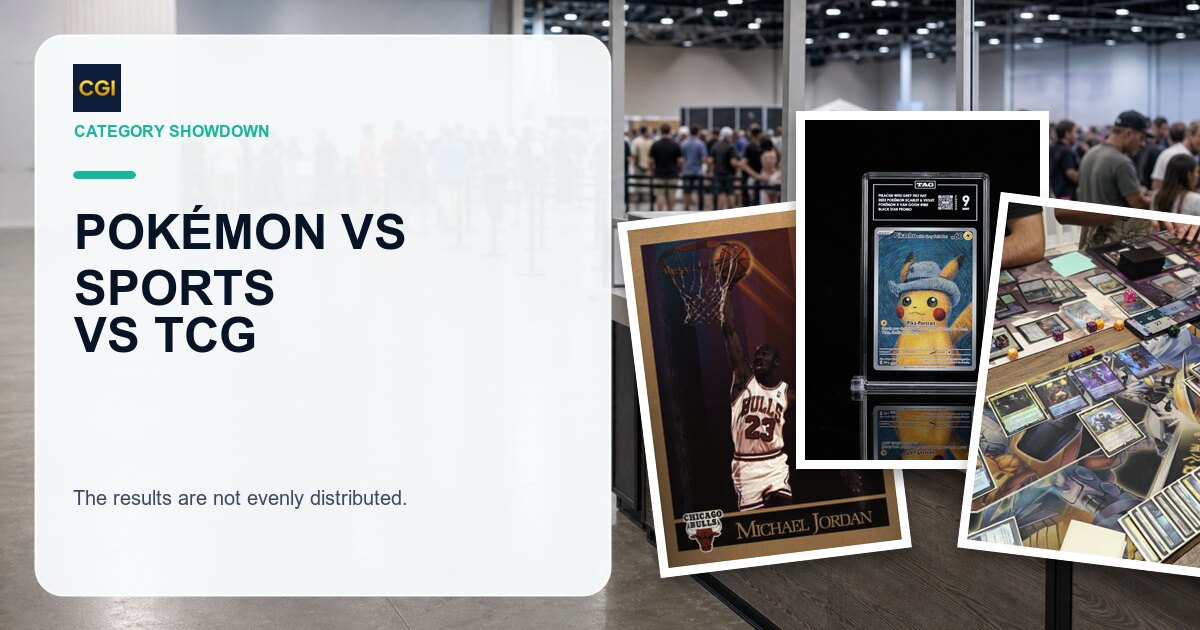
Pokemon card grading results, sports card grading averages, and TCG grade data compared. See which card categories grade best and why category matters for your submission strategy.
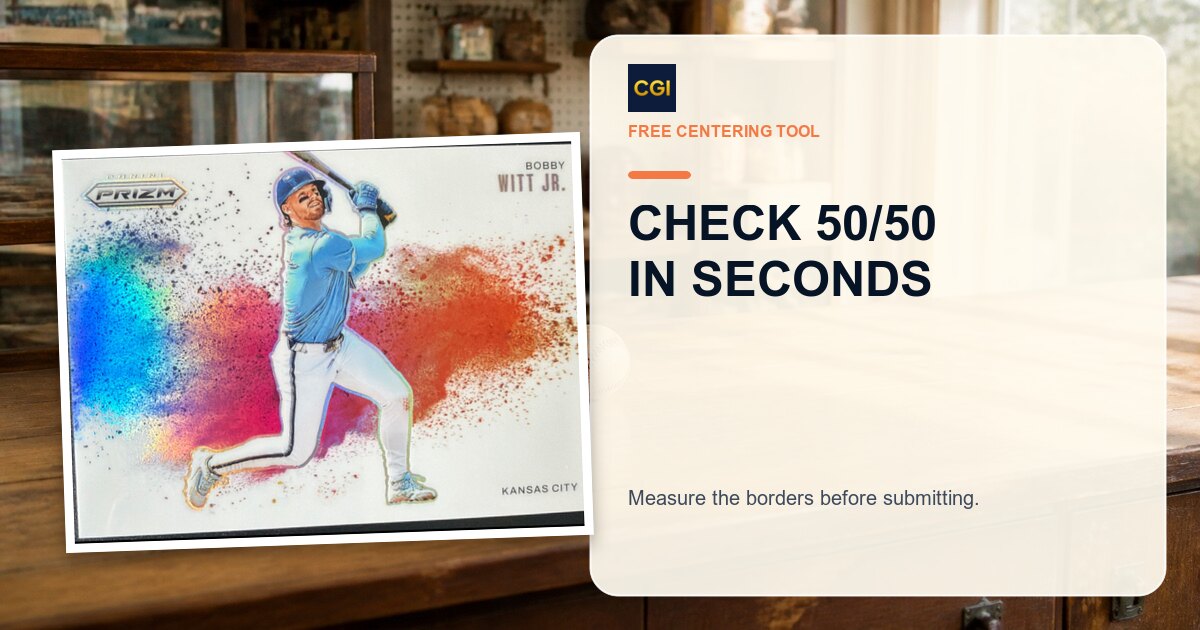
Discover how CardGrade's free online centering tool helps collectors analyze card edges, predict grading outcomes, and maximize card values—all without paying upfront fees. Get instant, professional-grade centering analysis for your trading cards.