How PSA Crossover Grading Works
PSA Crossover lets you submit a card already graded by another company without cracking it first. PSA evaluates the card in its current holder, and it
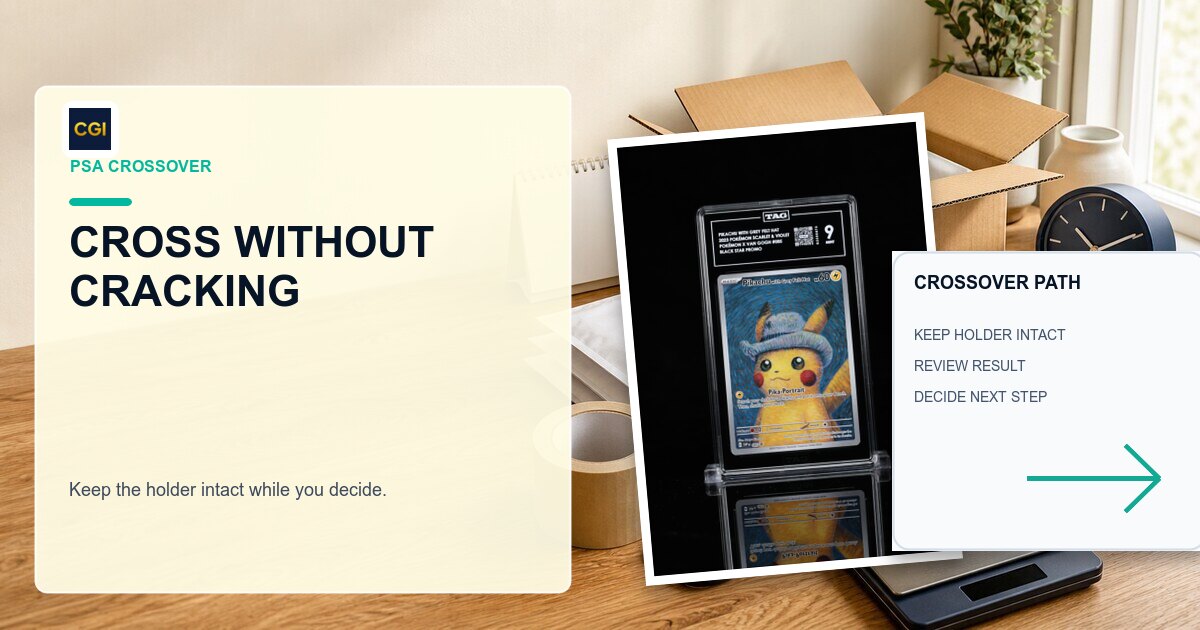
In short: PSA Crossover lets you submit a card already graded by another company without cracking it first. PSA evaluates the card in its current holder, and it moves the card into a PSA holder only if the card meets or exceeds the minimum grade you choose. If it misses, the card comes back in the original holder, but PSA still charges the grading fee.
What PSA Crossover actually does
Crossover is for a card already graded and encapsulated by another grading company. PSA examines the card through that existing holder. If PSA decides the card meets your stated minimum grade, PSA removes it and encapsulates it in a PSA holder. If it does not meet the minimum, PSA returns it in the holder you submitted.
That structure can reduce the risk of voluntarily cracking a card before PSA has evaluated it. It does not remove the financial risk: PSA says the full grading fee applies whether the crossover succeeds or fails.
Choose the minimum grade before you submit
The minimum grade is the lowest PSA grade you are willing to accept. PSA requires one on a Crossover submission. If you would accept any PSA numerical grade, PSA instructs you to enter 1.
A practical way to decide is to ask what outcome you are protecting:
- Protect the current label: Set the minimum at the lowest PSA result that would make losing the existing holder worthwhile to you.
- Prioritize getting a PSA holder: Use a lower threshold only if the holder change matters more than preserving the current labeled grade.
- Avoid wishful grading: Judge the card condition before setting the threshold. PSA states that choosing a minimum grade does not influence the grade its graders assign.