PSA Card Grading: Complete Guide to Submitting Cards in 2026
Guides
PSA Card Grading: Complete Guide to Submitting Cards in 2026
Learn everything about PSA card grading, from submission to getting your grade back. Pricing, tips, and how to pre-screen cards before sending.
Jamie Budesky·Founder, CardGrade·Published Aug 18, 2025 · Updated Aug 7, 2026·9 min read
What Is PSA Card Grading?
PSA card grading is the process of submitting your trading cards to Professional Sports Authenticator (PSA) for expert evaluation. PSA examines your card across multiple quality factors and assigns a numeric grade from 1 to 10. That grade is then sealed inside a tamper-evident holder, often called a "slab," giving buyers confidence in the card's condition.
Founded in 1991, PSA has graded over 50 million cards and remains the most recognized name in the hobby. Whether you collect baseball cards, Pokemon cards, or football cards, a PSA grading label carries significant weight in the marketplace.
Why Grade Your Cards with PSA?
Choosing to grade cards is not just about prestige. There are concrete, financial reasons collectors and investors send cards to PSA.
Market Dominance
PSA holds the largest market share among card grading companies. Their slabs are instantly recognizable, and most online marketplaces default to PSA when filtering by graded cards. This liquidity advantage means your cards sell faster.
Resale Value Multiplier
A raw card in near-mint condition might sell for $50. That same card in a PSA 10 slab could sell for $200 or more. The higher the grade, the larger the premium. For high-value cards, the return on investment from grading is substantial.
Authentication and Protection
PSA slabs protect your cards from environmental damage, handling wear, and counterfeiting. Each slab has a unique certification number that can be verified on PSA's website, giving buyers peace of mind.
Population Data
PSA maintains a population report showing how many copies of each card have received each grade. This data is invaluable for understanding rarity and making informed purchasing decisions.
Understanding the PSA Grading Scale
PSA uses a 1 to 10 numeric scale. Here is what each grade means:
Grade
Label
Description
PSA 10
Gem Mint
Virtually perfect in every way
PSA 9
Mint
A superb condition card with only minor flaws
PSA 8
NM-MT
Near Mint to Mint, slight imperfections
PSA 7
Near Mint
Minor wear visible on close inspection
PSA 6
EX-MT
Excellent to Mint with noticeable handling
PSA 5
Excellent
Moderate wear but still presentable
PSA 4
VG-EX
Very Good to Excellent, visible wear
PSA 3
VG
Very Good, significant wear
PSA 2
Good
Considerable wear and damage
PSA 1
Poor
Heavy damage, still authentic
The Gem Mint 10 Premium
The jump from PSA 9 to PSA 10 is where the real money is. For popular cards, a PSA 10 can be worth two to five times more than a PSA 9. This is why collectors obsess over perfect centering, sharp corners, clean edges, and flawless surfaces.
Step-by-Step PSA Submission Process
Submitting cards to PSA is straightforward once you know the process. Here is how it works:
Step 1: Create a PSA Account
Visit the PSA website and create a free account. You will need this to submit cards, track orders, and access your grading history.
Step 2: Choose Your Service Level
PSA offers multiple pricing tiers with different turnaround times. Select the service level that matches your budget and timeline. We cover pricing in detail below, and you can find a full breakdown on our PSA card grading cost page.
Step 3: Fill Out Your Submission Form
For each card, you will need to provide:
Card year
Brand and set name
Card number
Player or character name
Declared value
Accuracy matters here. Incorrect information can delay your order or result in cards being returned ungraded.
Step 4: Prepare Your Cards for Shipping
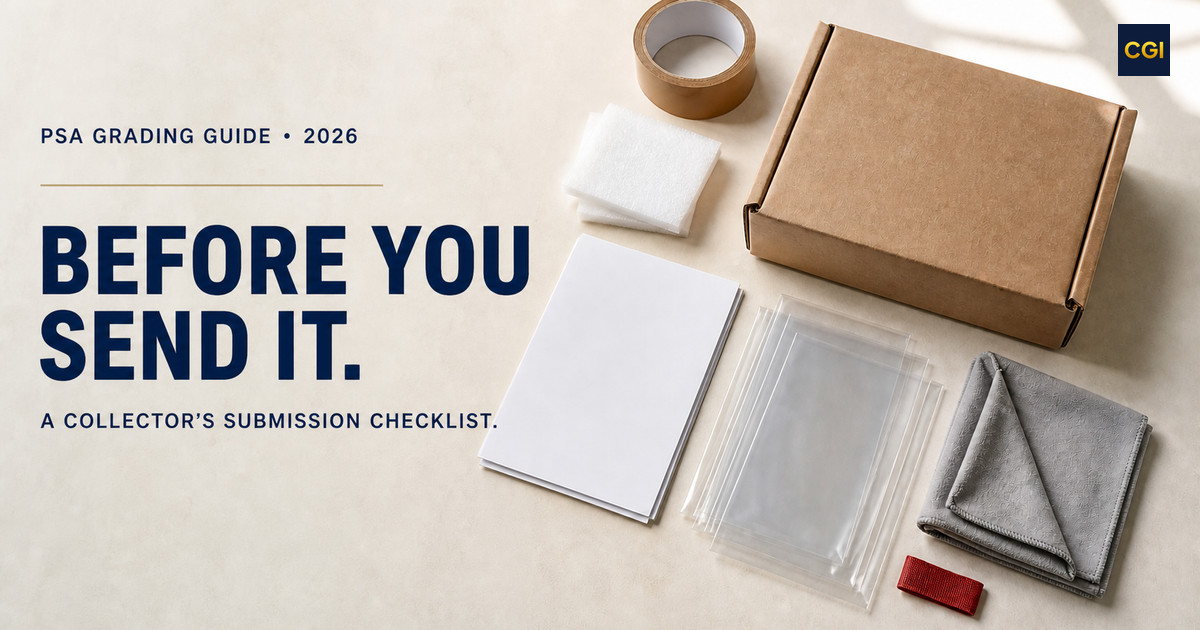
Proper packaging is critical. Follow these steps:
Place each card in a clean penny sleeve
Insert the sleeved card into a semi-rigid card saver (PSA prefers Card Saver 1 holders over top loaders)
Stack cards neatly in a small box
Fill empty space with packing material to prevent movement
Place the box in a padded shipping envelope or small box
Step 5: Ship to PSA
Ship your package to the PSA facility using a tracked shipping method with insurance. USPS Priority Mail with tracking and insurance is a common choice for smaller submissions.
Step 6: Wait for Your Grades
Once PSA receives your package, your cards enter the grading queue. Turnaround time depends on your service level. You can track the status of your order through your PSA account.
Step 7: Receive Your Graded Cards
PSA ships your graded cards back in secure packaging. Each card arrives in its sealed PSA slab with the grade displayed prominently.
PSA Pricing Tiers Overview
PSA paused all four Value services on June 2, 2026. As of June 27, these are the active direct tiers:
Turnaround times fluctuate based on PSA's volume. During peak periods, such as after major product releases or holiday seasons, times can stretch well beyond estimates. During slower periods, you may get cards back faster than expected.
Pro tip: Track PSA turnaround time reports on collector forums and social media groups for real-time data from other submitters.
Tips for Getting Higher PSA Grades
The difference between a PSA 9 and PSA 10 can be hundreds or even thousands of dollars. Here is how to give your cards the best chance:
Handle Cards Carefully
Always handle cards by the edges. Use clean, dry hands or cotton gloves. A single fingerprint on a glossy surface can knock your grade down.
Inspect Before Submitting
Use a magnifying glass or loupe to inspect:
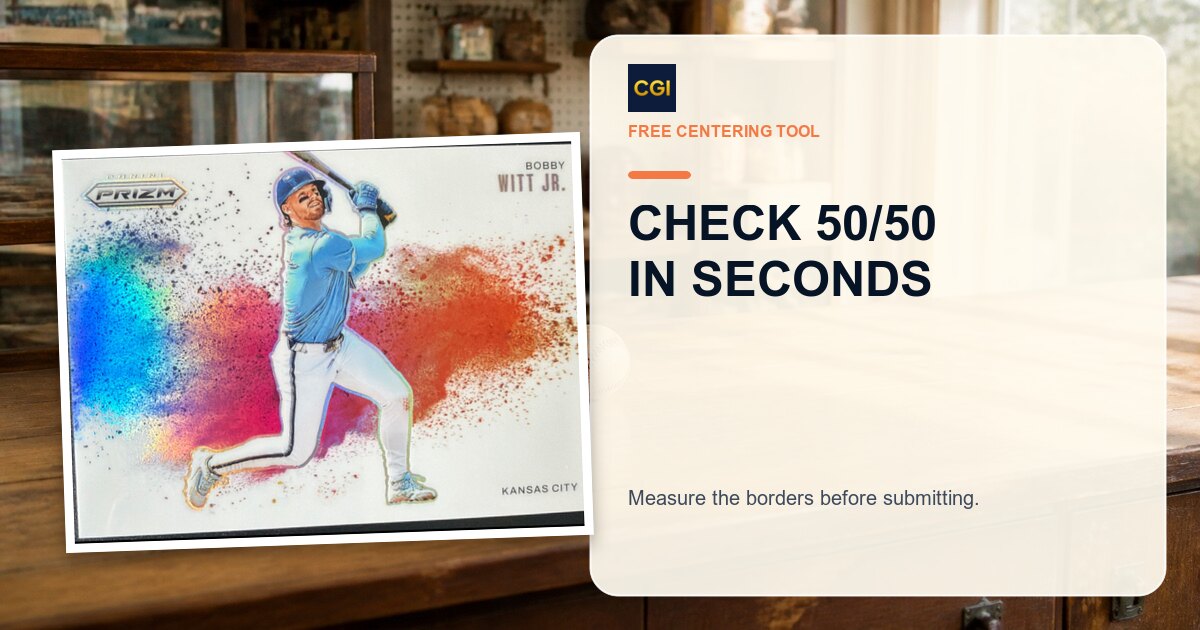
Centering: Is the image centered within the borders? PSA allows up to 60/40 centering for a PSA 10
Corners: Look for any dings, whitening, or softness
Edges: Check for chipping, rough cuts, or whitening
Surface: Look for scratches, print defects, or staining
Use Proper Storage
Store cards in penny sleeves and top loaders from the moment you pull them. Avoid rubber bands, binder pages that are not acid-free, and any environment with moisture or temperature extremes.
Choose Cards Wisely
Not every card is worth grading. The cost of grading only makes sense if the graded card will be worth meaningfully more than the raw card minus the grading fee.
Pre-Screen Your Cards with CardGrade.io Before Submitting
One of the smartest moves you can make before spending $20 to $300 per card on PSA card grading services is to pre-screen your cards using AI technology.
CardGrade.io uses CGI Vision AI to analyze your cards across 16 inspection zones in 60 seconds. The system predicts your PSA, BGS, and CGC grades with AI-powered analysis, examining centering, corners, edges, and surface condition in detail.
Here is why pre-screening matters:
Save money: Only submit cards that are likely to receive high grades
Avoid disappointment: Know your card's likely grade before spending on shipping and grading fees
Make informed decisions: If a card is borderline, you can decide whether the grading cost is worth the potential return
Free to try: CardGrade.io offers plans from $4.99/mo with plans start at $4.99/mo
Instead of sending a stack of 20 cards to PSA and hoping for the best, screen them first. Submit only the cards that CardGrade.io predicts will grade well, and hold back the rest. The savings add up quickly.
Even experienced collectors make these mistakes. Learn from them:
Submitting Cards That Are Not Worth Grading
A common card worth $2 raw will cost you $20+ just to grade, plus shipping both ways. Only grade cards where the potential graded value significantly exceeds your total costs.
Using Top Loaders Instead of Card Savers
PSA specifically requests semi-rigid Card Saver 1 holders. Submitting in hard top loaders can delay processing and may result in handling marks when PSA removes the card.
Declaring Incorrect Values
If your card grades higher than expected and the declared value is too low, PSA may charge you the difference at a higher service tier. Be realistic with declared values.
Poor Packaging
Cards shifting during shipping can cause damage that was not there when you mailed them. Invest a few extra minutes in proper packing.
Skipping Pre-Screening
Sending cards blindly to PSA is expensive. Use tools like CardGrade.io's AI centering tool to check your card's centering before spending money on a submission.
Not Tracking Market Trends
Card values fluctuate. A card that was worth grading six months ago might not be today. Always check current market prices before submitting.
Conclusion
PSA card grading remains the gold standard in the hobby. Their slabs command the highest premiums, their population data is unmatched, and their authentication gives buyers confidence. Whether you are grading a vintage Mickey Mantle rookie card or a modern Pokemon alt art, PSA is a strong choice.
The key to a successful PSA submission is preparation. Inspect your cards carefully, choose the right service level, package properly, and most importantly, pre-screen before you spend. Use CardGrade.io's AI grading tool to predict your grades in seconds, saving you time, money, and frustration.
Jamie Budesky is the founder of CardGrade and the engineer behind its AI vision grading pipeline. An Army veteran and IT specialist (DoD, since 2017), he writes about card grading, AI/ML grading technology, and collecting strategy — grounded in CardGrade's own grading data.